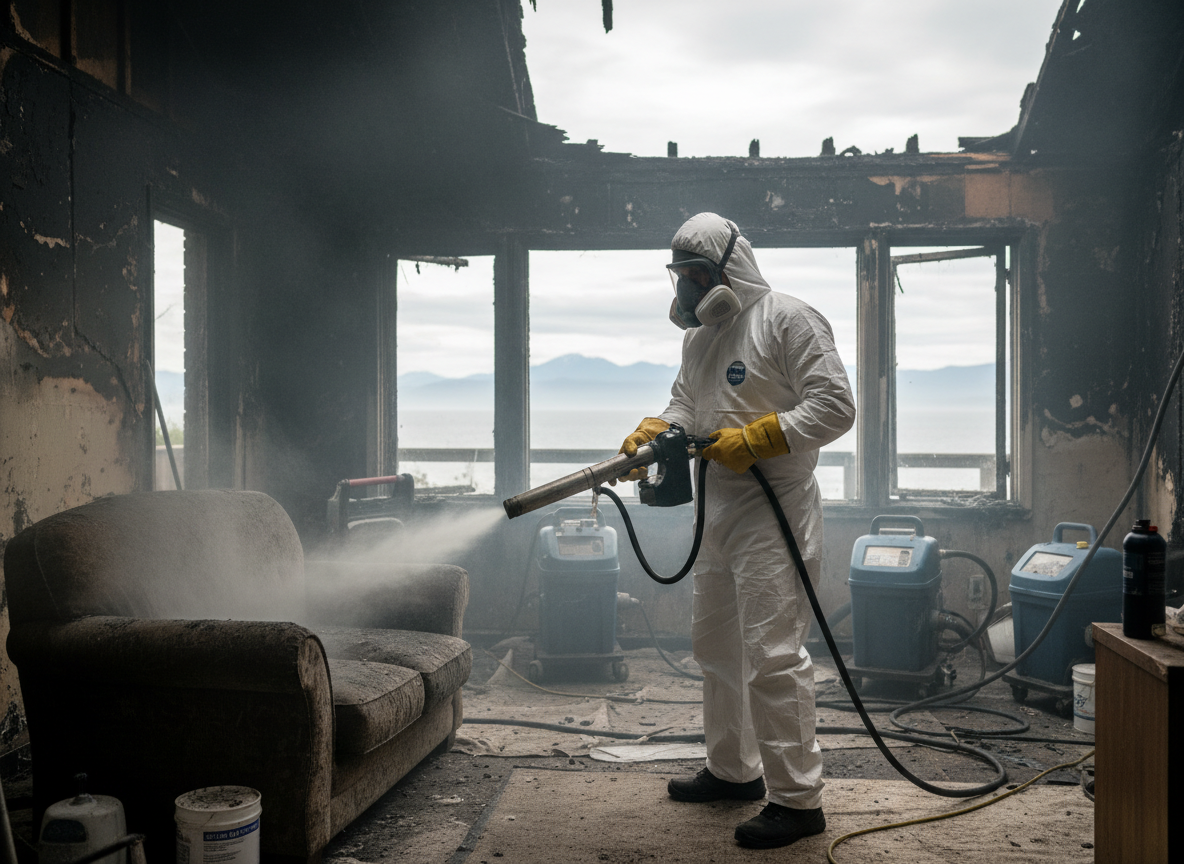
Camano Island homes in neighborhoods like Utsalady and Camano City often feature older cedar siding and insulated interiors that absorb smoke deeply during dry summer fires. Wet winters then introduce moisture that reactivates those odors, requiring more than surface cleaning. Technicians must account for airflow patterns around Cama Beach State Park terrain where salt air accelerates corrosion on HVAC components carrying smoke residues.
Effective odor removal here starts with identifying hidden pockets in attics and crawl spaces common to Madrona Beach properties. Thermal fogging and hydroxyl generators address porous materials like drywall and carpet padding without introducing excess moisture that could worsen mold risks during the region's rainy season. Nearby Stanwood and Arlington winds can push smoke into structures differently than inland fires, changing treatment dwell times.
Homeowners sometimes overlook how Island County building codes affect sealing after treatment, especially in structures near Camano Island State Park where ventilation requirements are strict. Skipping post-treatment air sampling leaves lingering particulates that reappear once summer humidity drops. Proper sequencing prevents these callbacks in the marine climate.
Restoration crews coordinate with local power providers when electrical systems in older Camano City homes have been compromised, ensuring safe ozone or plasma equipment use. This step-by-step approach matches the actual construction and weather patterns rather than generic methods.
Technician insight
In Camano Island the thing that catches most people out with Odor removal after fire is how wet winters drive moisture into cedar and insulation in Utsalady homes, reactivating smells that stayed dormant through dry summers. Homeowners often try DIY sprays that just push residues deeper into HVAC runs.
Lingering Smoke in Camano City Attic
A fire in a Camano City home left smoke odors that returned each winter. Inspection found residues trapped in older insulation and ductwork. We performed source removal followed by targeted hydroxyl treatment. Odors did not return after the next wet season.
How it works
- 1
Initial Assessment
Inspect affected rooms, HVAC, and hidden cavities in Utsalady or Madrona Beach homes to map smoke penetration.
- 2
Source Removal
Remove charred materials and clean surfaces before odor treatment begins.
- 3
Odor Neutralization
Apply thermal fogging or hydroxyl treatment calibrated for wet winter moisture levels.
- 4
Verification and Clearance
Test air quality and confirm odors are eliminated before final sealing.
Pricing
Pricing depends on smoke penetration depth, home size, and seasonal moisture conditions.