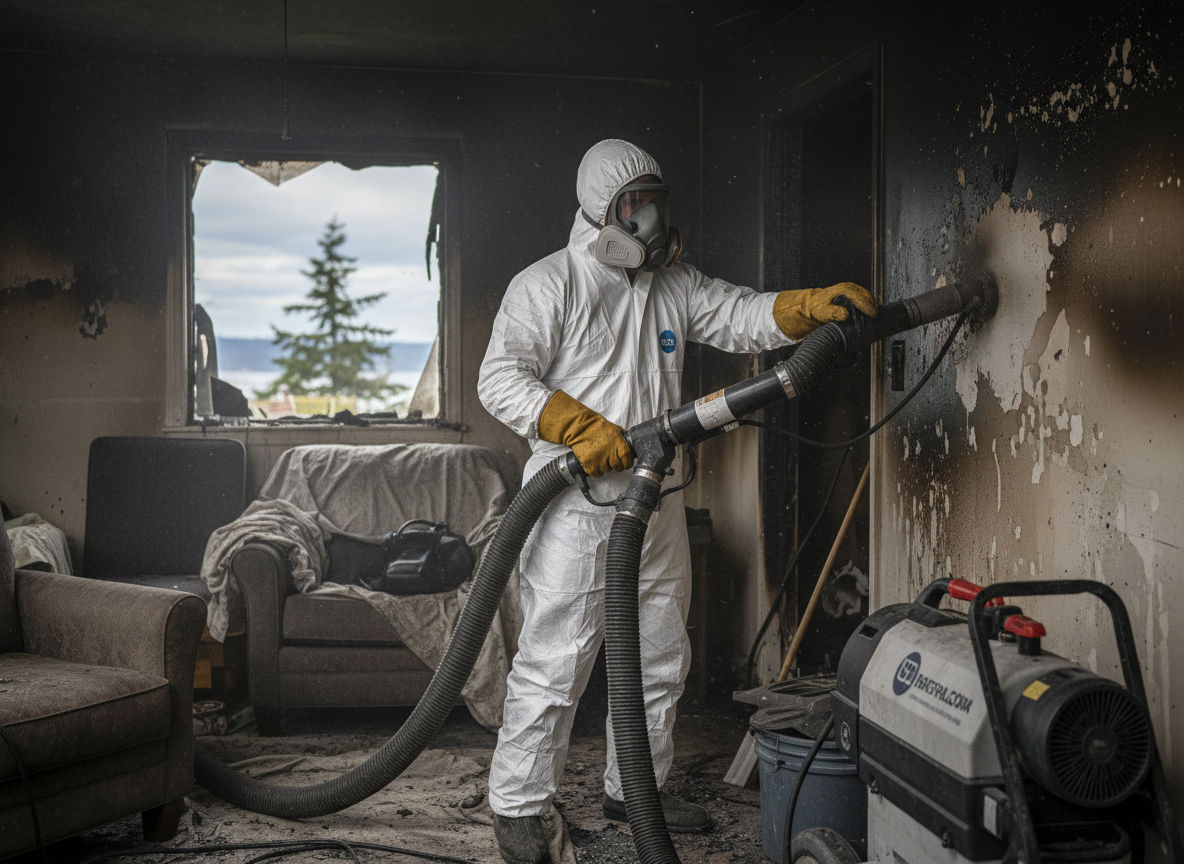
Smoke from structure fires travels through the HVAC systems and attics common in Camano Island homes built before the 1980s. In neighborhoods like Utsalady and Camano City the combination of cedar siding and older plaster walls lets fine particulates settle deep into cavities. Wet winters keep humidity high enough that residues stay tacky for weeks, while dry summers can bake them onto surfaces and make later removal harder. Technicians must test multiple layers rather than assume surface cleaning is enough.
Island County properties near Camano Island State Park and Cama Beach State Park often sit on wooded lots where wind carries smoke farther than homeowners expect. Residues collect on insulation, behind built-in cabinets, and inside ductwork that runs to second-floor bedrooms. Standard household cleaners leave behind a film that reactivates when humidity rises again. Proper remediation requires pH-neutral agents matched to the specific soot type and repeated verification with moisture meters and odor probes.
Homes in Madrona Beach and along the east side of the island frequently have crawl spaces that pull in smoke during a fire. Once settled there, the residues mix with soil moisture and create secondary odors that travel back upstairs through floor registers. Sealing and treating these spaces before final cleaning prevents repeat calls after the first rain. Work is coordinated around ferry schedules when equipment must come from Stanwood or Arlington suppliers.
Technician insight
In Camano Island, the thing that catches most people out with Smoke remediation is how wet winters let residues stay active inside the uninsulated crawl spaces found under many Utsalady and Madrona Beach homes. Homeowners often clean visible walls then wonder why the smell returns after the first heavy rain.
Kitchen Fire Smoke in Camano City
A kitchen fire sent smoke through the central ducts of a Camano City house. Residue had collected on insulation batts and behind kitchen cabinets near the park boundary. Crews sealed the HVAC, cleaned cavities, and treated the crawl space. Odors did not return after the next wet period.
How it works
- 1
Initial Assessment
Technicians inspect all affected rooms, test HVAC runs, and document residue locations in homes throughout Camano Island.
- 2
Containment Setup
Plastic barriers and negative air machines isolate smoke-damaged zones to stop cross-contamination into clean areas.
- 3
Residue Removal
Specialized cleaners and equipment remove soot from walls, ceilings, ducts, and insulation without spreading particles.
- 4
Odor Neutralization
Thermal fogging or hydroxyl treatment reaches hidden cavities common in older Island County construction.
- 5
Final Verification
Air quality readings and surface tests confirm residues are gone before barriers come down.
Pricing
Pricing depends on square footage affected, depth of smoke penetration into insulation and ducts, and whether crawl spaces require treatment.