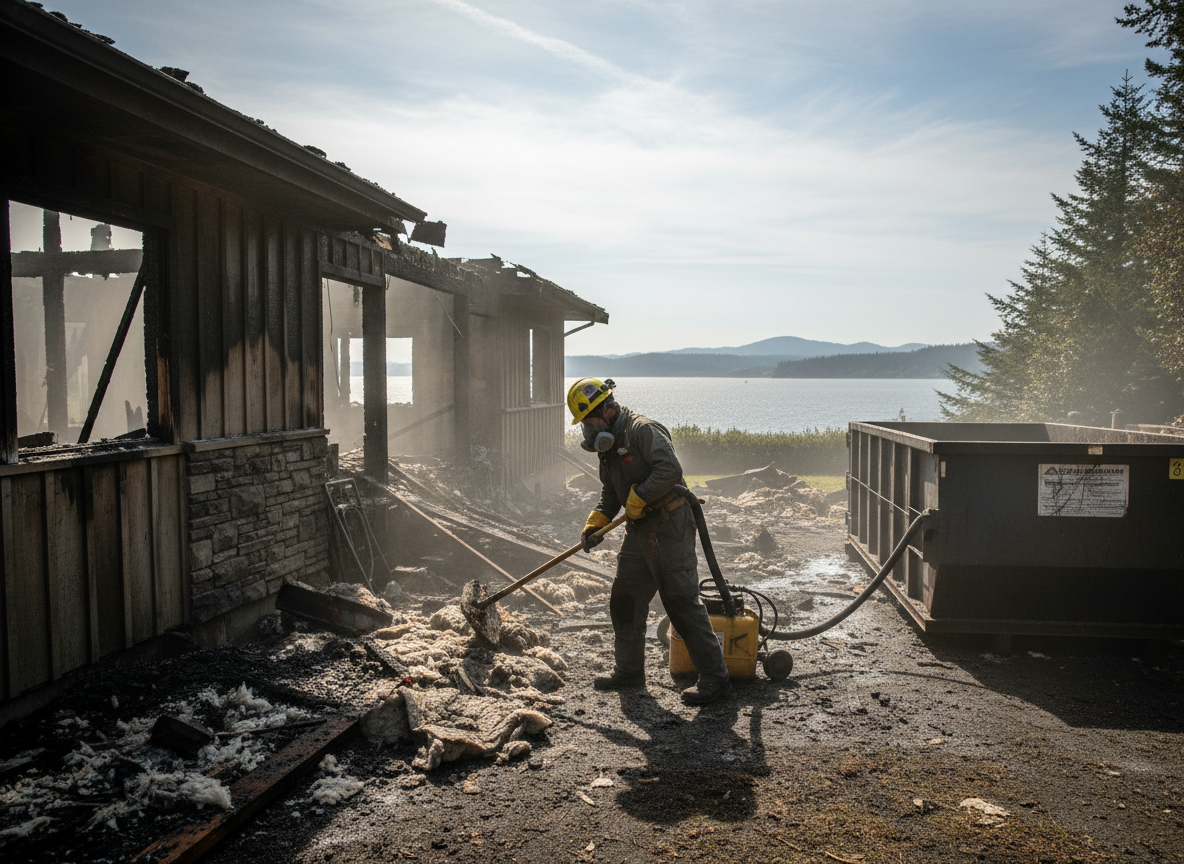
Fires in Camano Island homes often leave heavy smoke penetration through the older cedar-shake and wood-frame construction common around Camano City and Utsalady. Wet winters bring persistent moisture that mixes with soot, driving residue deep into wall cavities and attic insulation where it later reappears as staining or odors once summer drying begins. Crews must separate salvageable contents early because the marine climate slows natural evaporation and can turn surface soot into corrosive acids on metal fixtures and wiring.
Island County building stock from the 1970s and 1980s frequently contains lath-and-plaster or early drywall that absorbs odors differently than modern materials. After a fire near Cama Beach State Park or Madrona Beach, crews test for hidden char behind cabinets and under flooring before any reconstruction, because the dry summer winds can re-ignite smoldering pockets if ventilation is incomplete. Local terrain with limited road access in some waterfront neighborhoods also means equipment staging must happen in one trip to avoid delays.
Smoke migration through shared attics in Camano City duplexes requires isolating HVAC systems immediately to prevent cross-contamination into neighboring units. The combination of salt air and combustion residues accelerates corrosion on copper plumbing and electrical boxes, so replacement decisions are made during the initial inspection rather than after drying. Homeowners in Stanwood and Arlington who commute to the island often discover secondary water damage from suppression efforts only after returning, which is why 24/7 response from the Camano base at 370 NE Camano Dr is essential.
Post-fire cleaning protocols must account for the island's limited landfill options, so crews separate and document debris volumes on-site to coordinate with Island County waste rules. Residue from burning treated lumber or plastics common in older Madrona Beach cottages leaves specific chemical signatures that require targeted neutralizers rather than standard degreasers.
Technician insight
In Camano Island, the thing that catches most people out with Emergency fire damage restoration is how wet winters let soot and suppression water combine inside the wall cavities of older Utsalady and Camano City homes, creating hidden corrosion on wiring that only shows up after the summer dry period.
Attic fire spread in Camano City
Problem: smoke traveled through shared attic space into two bedrooms after a wiring fire. What we found: soot embedded in fiberglass insulation and salt-air corrosion already forming on copper lines. What we did: isolated HVAC, removed affected insulation, and ran targeted drying before reconstruction. Outcome: home passed clearance testing within ten days with no recurring odor once summer winds returned.
How it works
- 1
Secure And Assess
Board openings, confirm utilities are safe, and document all affected rooms in the home before moving contents.
- 2
Remove Debris And Soot
Clear charred materials and vacuum loose soot from surfaces using HEPA equipment rated for fire residue.
- 3
Dry And Deodorize
Deploy air movers and dehumidifiers while applying odor neutralizers matched to the smoke type present.
- 4
Final Clearance Testing
Inspect cavities and run clearance checks before any reconstruction begins on Camano Island properties.
Pricing
Upfront quotes after on-site inspection; final cost depends on square footage affected, smoke migration into attics, and whether contents require off-site cleaning.