2026-10-17 ·
Local Considerations When Planning Fire Damage Restoration Near Camano Island Forests
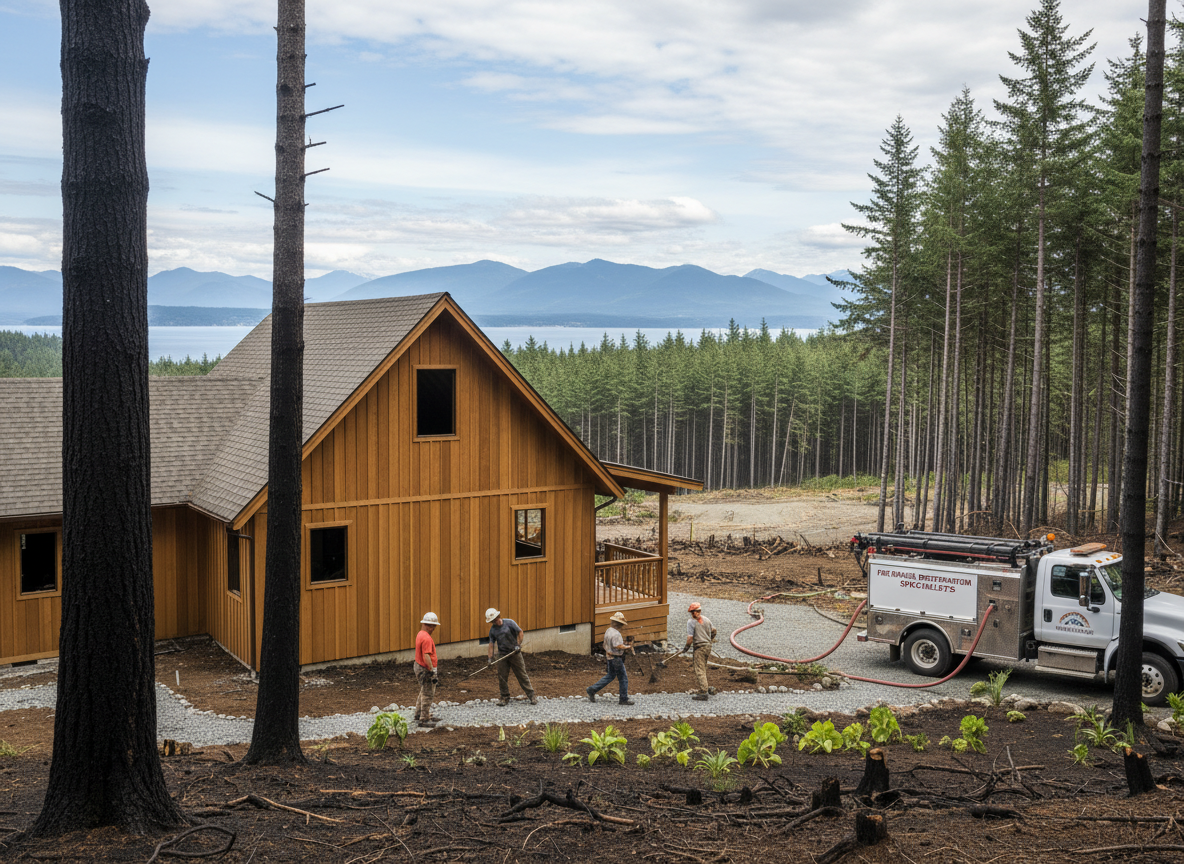
Planning fire damage restoration near Camano Island forests starts with recognizing how proximity to wooded areas around Camano Island State Park and Cama Beach State Park alters smoke travel and residue patterns in neighborhoods such as Utsalady, Camano City, and Madrona Beach. Island County's mild marine climate brings wet winters that trap moisture in structures while dry summers raise the chance of wind-driven embers reaching homes from forest edges. Crews must adjust timelines and equipment choices accordingly rather than applying generic inland methods.
Forest Interface Effects on Residue Spread
Homes bordering forests in Utsalady and near Camano City often receive heavier soot loads on exterior siding and rooflines because prevailing winds carry particles farther from tree canopies. Restoration teams inspect attic vents and crawl spaces first since embers can lodge in those voids during dry summer events. In contrast, properties closer to Madrona Beach see more diluted deposits due to open water exposure. Crews use portable air scrubbers sized for the square footage and run them longer when humidity stays above typical winter levels to prevent re-soiling. This approach differs from urban jobs because forest fuels produce finer particulates that penetrate deeper into insulation. Local crews document these patterns on every call to refine containment plans for future incidents in the same zones.
Climate Impact on Drying and Containment
Wet winters in Island County extend drying times after water is introduced during suppression, often requiring dehumidifiers to run 48 to 72 hours longer than in drier regions. Dry summers reduce ambient moisture but increase the risk of re-ignition from hidden embers in forest-adjacent lots. Restoration protocols therefore include daily moisture readings in wall cavities and under flooring in homes throughout Camano City. When temperatures drop and rain returns, crews seal openings more aggressively to avoid introducing additional water that could foster mold alongside smoke odors. These seasonal adjustments keep projects on schedule despite the marine climate's swings between 40-degree wet periods and occasional 80-degree dry stretches.
Terrain and Access Realities Near State Parks
Sloped driveways and narrow roads leading to properties around Cama Beach State Park and Camano Island State Park limit the size of equipment that can reach job sites quickly. Crews stage larger drying units at the base of hills and run hoses uphill, adding setup hours not seen on flat Stanwood or Arlington lots. Forest terrain also means more hand-carrying of containment barriers through underbrush to protect adjacent vegetation during exterior cleaning. In Utsalady, older gravel access roads can soften after winter rains, requiring crews to schedule heavy equipment deliveries before the next storm front arrives. These constraints shape every project timeline and require pre-planning with property owners about parking and staging areas.
Material Responses in Local Housing Stock
Many homes built before 1980 in Camano City and Madrona Beach contain plaster walls and older insulation that absorb smoke differently than modern drywall. Restoration crews test these materials on site because solvent-based cleaners can damage aged finishes common in Island County construction. Forest proximity adds another variable: cedar siding prevalent near wooded edges darkens permanently if not treated within the first week after exposure. Crews therefore prioritize odor removal after fire in these structures using paired filtration and sealing methods rather than surface wiping alone. This material-specific knowledge prevents callbacks that occur when standard urban procedures are applied without adjustment for local building practices.
Coordinating With Nearby Service Areas
Jobs in Camano Island frequently overlap with work in Stanwood and Arlington because residents travel those routes daily. Crews maintain shared equipment caches in those cities to reduce response times when multiple forest-edge incidents occur during dry spells. Linking projects across Island County allows consistent documentation of smoke patterns that repeat in similar terrain. Homeowners benefit when teams already understand the specific challenges of moving between county roads and state park boundaries without delays.