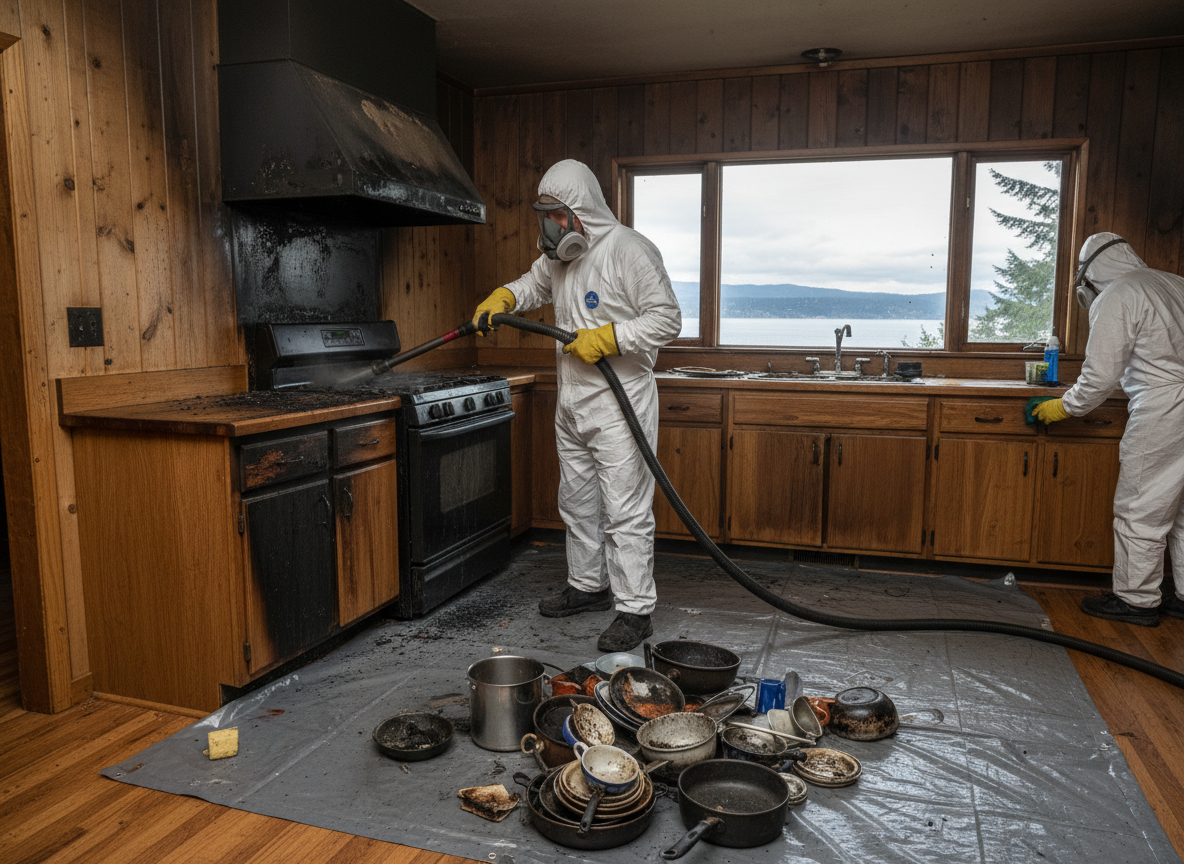
Kitchen fires on Camano Island often start from grease or unattended cooking and quickly coat cabinets, range hoods and drywall with oily soot that bonds to surfaces in the island’s humid marine air. Homes in Camano City and Utsalady built before the 1980s frequently have older plaster and cedar trim that absorb odors deeply, requiring specialized cleaners rather than standard wiping. Wet winters increase the risk of secondary water damage once fire-suppression moisture sits in crawl spaces or behind baseboards, while dry summers can make loose soot airborne again during cleanup. Technicians must also check HVAC returns that run through single-story layouts common here, because smoke travels quickly into living areas and bedrooms.
Edge cases include hidden residue inside electrical boxes and under laminate flooring, both frequent in Island County kitchens. Residue left behind can corrode copper wiring and trigger future failures. After any kitchen fire, crews test pH levels on surfaces because alkaline soot from burned synthetics reacts differently than acidic grease smoke. Homeowners in Madrona Beach often discover that nearby salt air accelerates corrosion on metal appliances once the protective coating is breached. Proper disposal of contaminated cabinetry and insulation must follow local landfill rules for Island County to avoid rejected loads.
Ventilation during cleaning is critical because Camano Island’s mild but damp winters limit natural airflow, trapping chemical odors inside. Crews use air scrubbers and negative air machines positioned to exhaust through exterior doors rather than windows that face prevailing winds from the Sound. In homes near Camano Island State Park or Cama Beach State Park, crews also protect surrounding vegetation from runoff during washing. Final clearance includes a third-party odor check because returning residents notice trace smells first in the morning when humidity rises.
Technician insight
In Camano Island the thing that catches most people out with kitchen fire cleanup is how cedar paneling and older plaster in Utsalady homes hold grease smoke long after the fire is out, especially once winter humidity sets in and reactivates the odor.
Kitchen fire in Camano City home
A grease fire spread from the stove into upper cabinets of a 1970s single-story house. We found soot had traveled through the return ducts into two bedrooms. Containment was placed, cabinets and ducts were cleaned with pH-adjusted solutions, and air scrubbers ran for three days. The family moved back in after odor testing cleared the home.
How it works
- 1
Initial Assessment
Technician inspects all affected rooms, tests surfaces for soot type and documents hidden damage in walls and HVAC.
- 2
Containment and Safety
Plastic barriers and negative air are set up; electrical and gas lines are isolated before cleaning begins.
- 3
Deep Cleaning
Specialized degreasers and sponges remove bonded soot from cabinets, ceilings and ducts; contents are cleaned or inventoried for disposal.
- 4
Drying and Odor Removal
Dehumidifiers and air scrubbers run until moisture and odors are gone, followed by a final walkthrough with the homeowner.
Pricing
Cost depends on square footage affected, soot type and whether HVAC or structural materials require replacement; upfront quotes provided after inspection.