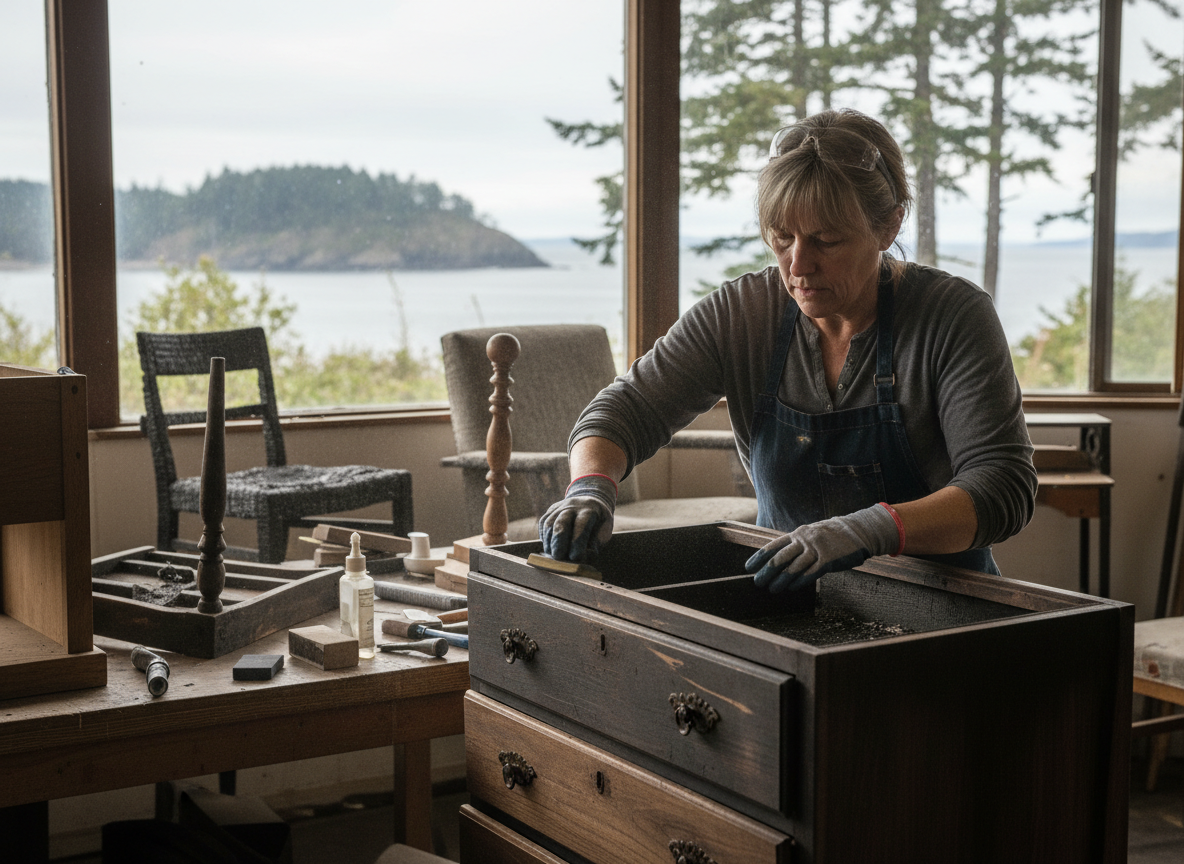
Fire-damaged furniture restoration on Camano Island requires careful assessment of smoke penetration into wood, upholstery, and finishes common in older homes around Camano City and Utsalady. Wet winters in the mild marine climate often leave residual moisture that combines with soot to create hidden corrosion on metal hardware and warping in solid wood pieces from homes built decades ago. Technicians at 370 NE Camano Dr evaluate each item for pH levels in soot residues before choosing solvent or aqueous cleaning methods to avoid setting stains permanently.
Edge cases arise with pieces stored near Cama Beach State Park or Camano Island State Park where salt air accelerates oxidation on brass and iron fittings after a fire. Dry summers reduce initial humidity but increase static that binds fine particulates deeper into fabrics and leather. Restoration avoids aggressive sanding on antique finishes found in Madrona Beach cottages and instead uses controlled micro-abrasion or refinishing techniques matched to the original material to preserve value.
Homeowners in Stanwood and Arlington who bring items to Camano Island properties face added challenges from terrain-driven smoke patterns that funnel through valleys and settle in low-lying furniture. Proper documentation of pre-existing wear versus new damage prevents disputes during insurance claims. All work follows safe handling protocols for items that may contain lead-based paints or varnishes typical in Island County housing stock older than 1978.
Technician insight
In Camano Island, the thing that catches most people out with fire-damaged furniture restoration is hidden moisture trapped in older wood frames after wet winters. Homeowners in Camano City often assume surface cleaning is enough, but the marine climate drives soot deep into joints where it later blooms as corrosion on hardware or mold under upholstery. Checking moisture readings before any refinishing prevents callbacks that show up months later when dry summers end.
Soot-Damaged Dining Set in Utsalady
A kitchen fire in an older Utsalady home sent smoke through the main floor and coated an oak dining set. Inspection revealed elevated moisture in the table legs from recent winter rains plus acidic soot etching the finish. We performed phased cleaning, neutralized odors with hydroxyl treatment, and restored the original patina without aggressive sanding. The set returned to the home fully usable with no recurring odor during the following dry summer.
How it works
- 1
Initial Assessment and Documentation
Inspect each piece on-site or at the Camano facility for smoke depth, moisture content, and material type while photographing pre-existing conditions.
- 2
Containment and Pre-Cleaning
Isolate items to prevent cross-contamination, then remove loose soot using HEPA vacuuming suited to the wet winter residue patterns common locally.
- 3
Deep Cleaning and Odor Neutralization
Apply pH-balanced solutions or thermal fogging based on furniture construction, followed by ozone or hydroxyl treatment to address embedded smoke odors.
- 4
Repair, Refinishing, and Final Inspection
Address warping, corrosion, or finish damage with matched techniques, then reassemble and verify no lingering residues before return.
Pricing
Costs depend on number of pieces, material types, and smoke severity; most Camano Island jobs require an in-person assessment for accurate scope.