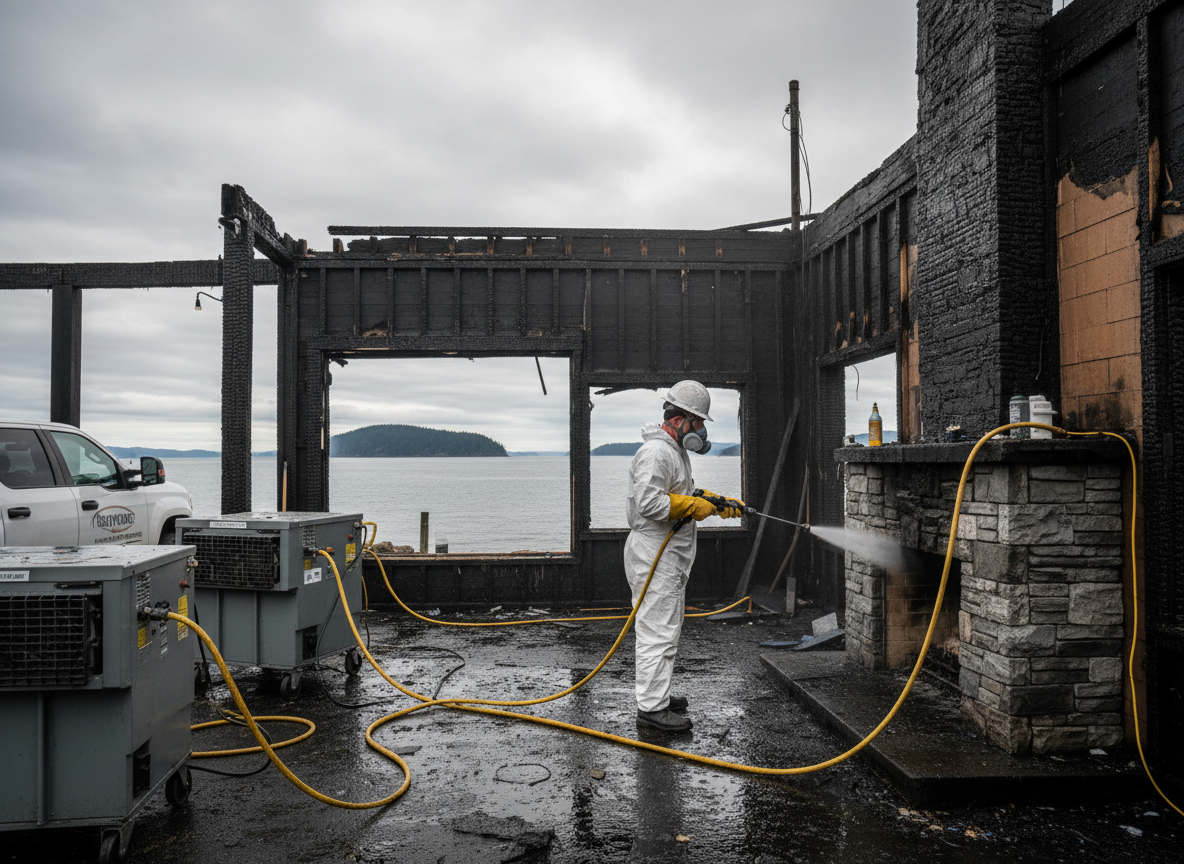
Commercial properties on Camano Island face distinct challenges after fire events because of the mild marine climate with wet winters. Moisture from rainfall and high humidity in Utsalady and Camano City can combine with fire-suppression water to create hidden mold risks inside wall cavities and under commercial flooring. Older retail and light-industrial buildings near Madrona Beach often contain mixed materials like cedar siding and older electrical systems that release unique soot residues requiring specialized cleaning sequences before any reconstruction begins.
Island County permitting for commercial rebuilds after fire damage requires coordination with local inspectors familiar with coastal wind loads and soil conditions near Cama Beach State Park. Restoration crews must document every step of soot removal and structural drying to meet these standards, especially when businesses sit close to Stanwood or Arlington supply routes where material delays are common. Failure to address residual smoke odor in HVAC systems can force repeated closures for restaurants and offices in Camano City.
Response timing matters on the island because winter storms can limit access across the bridge from Stanwood. Crews based at 370 NE Camano Dr maintain 24/7 availability to begin water extraction and corrosion control on metal fixtures before salt air accelerates damage. Commercial clients in Madrona Beach report faster recovery when initial containment focuses on protecting inventory from both smoke migration and subsequent damp conditions.
Seasonal Moisture Considerations
Wet winters increase the risk of secondary water damage inside commercial structures after fire suppression. Crews prioritize rapid dehumidification in Utsalady buildings to prevent mold in insulation and subfloors before dry summer winds arrive.
Code and Inspection Notes
Island County requires detailed moisture mapping and odor neutralization reports for commercial re-occupancy. Work near Camano Island State Park must also protect surrounding vegetation from runoff containing cleaning agents.
Technician insight
In Camano Island the thing that catches most people out with commercial fire restoration is how quickly winter rain drives humidity into soot-damaged wall cavities in older Camano City buildings. You can finish the visible cleaning only to find hidden moisture has already started corrosion on metal studs because the island's marine air never really dries out like it does over in Arlington.
Camano City Retail Shop Fire
A retail space in Camano City suffered a kitchen fire that spread smoke through the HVAC and left standing water from suppression. Inspection revealed elevated moisture in the subfloor near the rear storage area. Crews extracted water, performed targeted drying through the wet season, cleaned all ductwork and completed odor removal before the owner reopened without further mold issues.
How it works
- 1
Initial Assessment
Technicians arrive within hours, document soot patterns, water intrusion depth and affected HVAC zones in the commercial space.
- 2
Containment and Extraction
Negative air machines and water removal equipment isolate the loss and extract standing water before humidity in the marine climate drives mold growth.
- 3
Cleaning and Odor Removal
HEPA vacuuming, chemical sponges and thermal fogging address smoke residues on surfaces and inside ductwork common in Camano City retail buildings.
- 4
Drying and Monitoring
Industrial dehumidifiers and moisture meters track conditions through wet winter periods until readings meet commercial standards.
- 5
Rebuild Coordination
Repairs and finishes are completed with documentation for Island County permits and final inspection.
Pricing
Upfront quotes provided after inspection; final cost depends on square footage, extent of HVAC cleaning and winter moisture conditions.