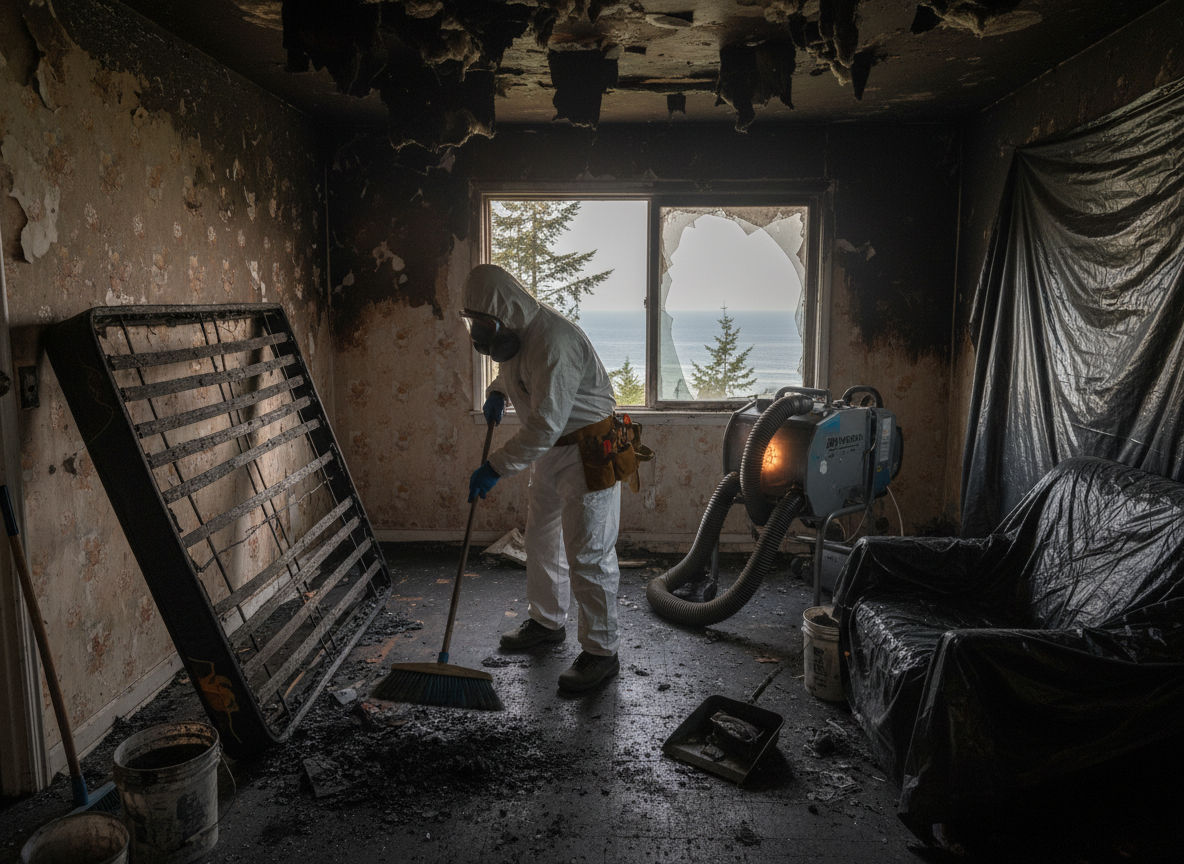
Bedroom fire damage cleanup on Camano Island often involves older wood-frame homes in neighborhoods like Utsalady and Camano City where smoke penetrates porous materials such as drywall, carpet padding, and insulation. Wet winters in Island County trap moisture in affected spaces, raising the risk of secondary mold growth if soot and water from suppression are not fully extracted. Technicians must test for hidden residues behind baseboards and in HVAC returns that connect to other rooms, using negative air machines to prevent cross-contamination into living areas.
Dry summers bring different challenges near Cama Beach State Park and Madrona Beach, where fine ash from coastal winds can settle into fabrics and electronics. Standard household cleaners fail on protein-based soot from bedroom fires involving bedding or furniture, requiring pH-neutral agents and HEPA vacuuming to avoid etching surfaces. In Stanwood and Arlington border properties, older electrical wiring adds edge cases where charred outlets must be isolated before any cleaning proceeds to meet current code inspection standards.
Homeowners frequently overlook attic insulation above bedrooms that absorbs odors and later releases them during temperature swings common to the marine climate. Proper documentation of pre-existing conditions in these older Island County structures protects against disputes during insurance claims. Restoration crews document every step from initial containment through final odor neutralization to ensure bedrooms return to safe occupancy without lingering smells.
Technician insight
In Camano Island the thing that catches most people out with Bedroom fire damage cleanup is how quickly smoke travels through the unsealed floor joists in 1970s and 1980s homes around Utsalady and Camano City during our wet winters, turning a single-room job into hidden odor problems weeks later if the subfloor isn't addressed.
Smoke migration through floor joists near Madrona Beach
A bedroom fire in a Camano City home left heavy soot on surfaces but the real issue emerged when odors returned after initial cleaning. Inspection revealed smoke had traveled under the floor into the crawlspace through gaps in older joists. We sealed and treated the subfloor area along with the bedroom, then ran extended ventilation to clear residual particles before final testing.
How it works
- 1
Initial Assessment
Inspect all affected surfaces, test air quality, and map smoke migration paths through the home's structure.
- 2
Containment Setup
Seal the bedroom and adjacent hallways with plastic barriers and negative air pressure to stop soot spread.
- 3
Soot and Residue Removal
Apply specialized cleaning agents to walls, ceilings, and contents while HEPA-filtering airborne particles.
- 4
Odor Neutralization
Use thermal fogging or ozone treatment calibrated for the room size followed by ventilation.
- 5
Final Verification
Conduct clearance testing and walk-through with the homeowner before returning the space to use.
Pricing
Upfront quotes provided after on-site inspection of soot depth and affected square footage.