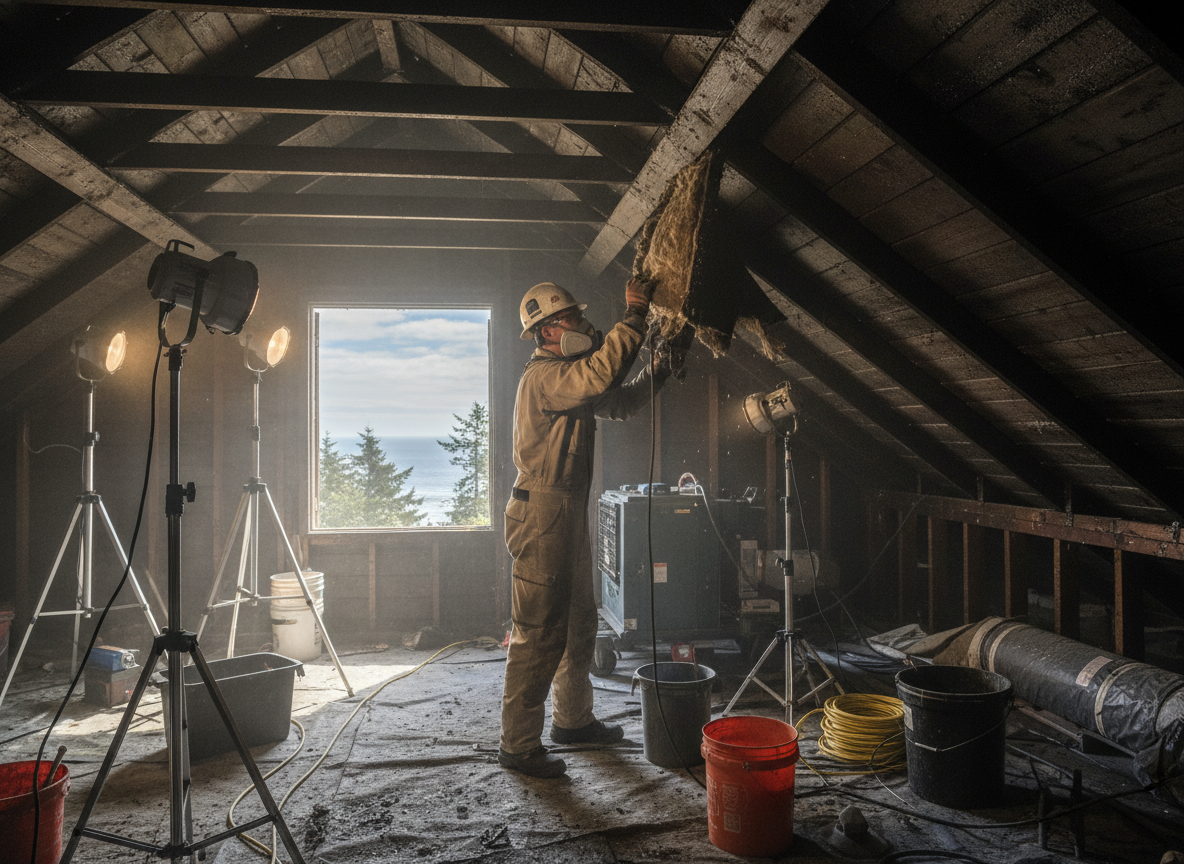
Camano Island homes in neighborhoods like Utsalady and Camano City often feature older wood-frame construction with cellulose or fiberglass attic insulation that readily absorbs smoke and odor. After a fire, hidden charring along rafters and trusses can compromise structural integrity, especially when combined with the island's mild marine climate where wet winters introduce moisture that turns soot into corrosive residue. Restoration crews must remove affected insulation completely while protecting the lower living spaces from falling debris, then apply odor-sealing primers rated for smoke before reinstalling code-compliant materials.
Access on Camano Island frequently involves steep driveways near Cama Beach State Park or narrow roads around Madrona Beach, limiting equipment size and requiring staged material handling. Dry summer conditions increase fire risk from electrical faults in aging wiring, while subsequent rain can saturate exposed sheathing and create hidden mold pockets within weeks. Technicians test for these moisture pockets using meters before sealing, and they coordinate with Island County permitting when rafter replacements exceed minor repairs.
Edge cases include smoke migration through shared attic spaces in duplexes near Stanwood or Arlington commuters' properties, where odors travel into finished rooms via HVAC returns. Proper negative-air containment and HEPA filtration prevent cross-contamination during debris removal. Final verification includes thermal imaging to confirm no residual heat remains in insulation cavities before homeowners return.
Technician insight
In Camano Island the thing that catches most people out with attic fire restoration is how quickly wet winters turn soot into an acidic mess that eats through older cedar rafters, especially in Utsalady homes where insulation was added decades ago without vapor barriers.
Electrical fire in Camano City attic
Problem: smoke from an attic outlet fire spread through insulation. What we found: extensive char along rafters and moisture already setting into cellulose from recent rain. What we did: contained the space, removed all affected materials, treated and sealed remaining structure, then reinsulated. Outcome: home cleared for occupancy within two weeks with no lingering odor.
How it works
- 1
Initial Assessment
Technicians inspect attic access points, test insulation and structural members for char depth, and document smoke migration paths in homes across Utsalady and Camano City.
- 2
Containment and Removal
Negative air machines isolate the attic while crews remove damaged insulation, charred wood, and soot-coated debris without disturbing lower living areas.
- 3
Cleaning and Treatment
HEPA vacuuming and specialized chemical agents neutralize smoke residue on remaining surfaces, followed by application of odor-blocking primers.
- 4
Restoration and Verification
New insulation is installed to current Island County standards, structural repairs are completed, and final moisture and odor checks confirm the space is safe.
Pricing
Costs depend on attic size, depth of char, and whether wet winter moisture has affected materials in Camano Island homes.