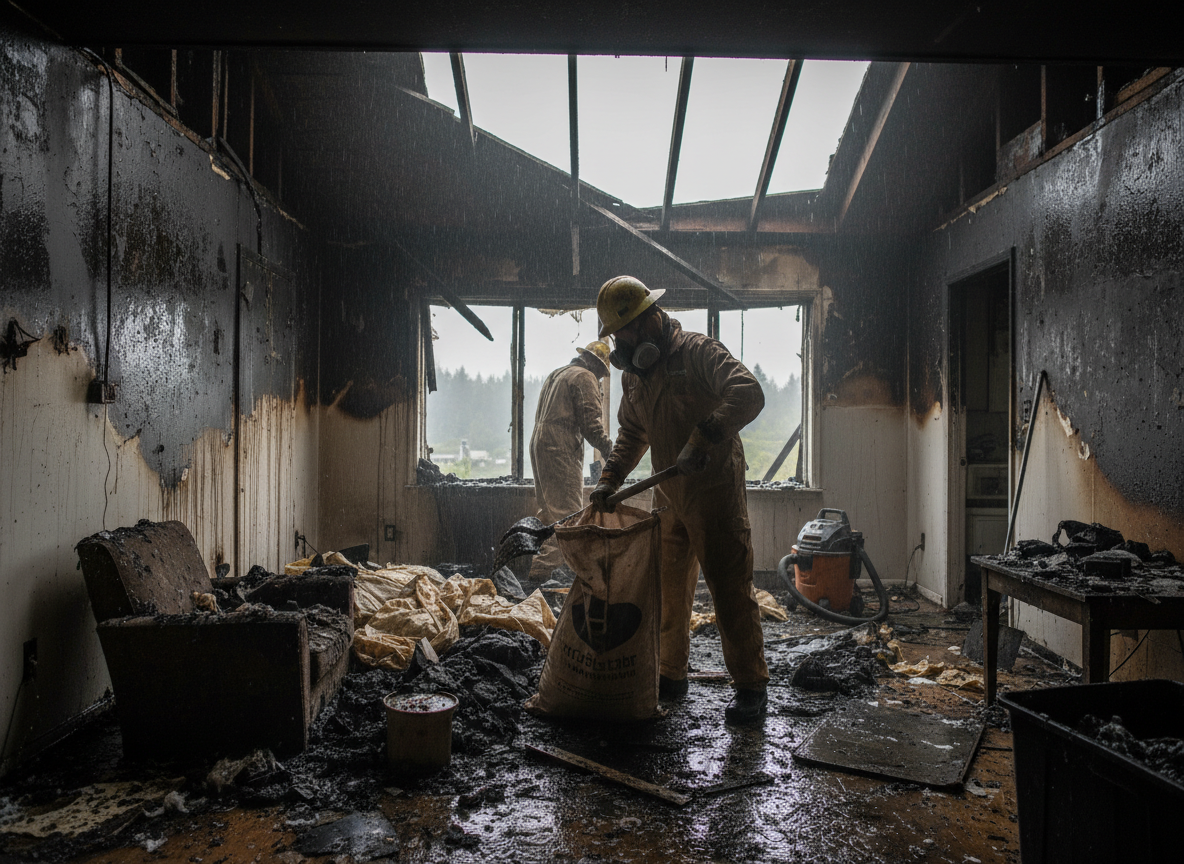
Apartment fire cleanup on Camano Island must account for older wood-framed buildings common in Utsalady and Camano City where smoke travels through shared HVAC ducts and wall cavities. Wet winters keep humidity high, so soot bonds tightly to drywall and insulation, requiring HEPA vacuuming followed by specialized chemical sponges rather than simple wiping. Dry summers reduce natural ventilation, allowing odors to concentrate in units near Cama Beach State Park. Technicians check every adjoining unit because smoke does not respect property lines, and failure to treat adjacent spaces leaves residents with persistent smells months later.
Island County building stock often features single-pane windows and limited attic insulation, so heat from a fire can warp framing and push particulates deep into fiberglass batts. After an apartment fire, crews seal off corridors with negative air machines to prevent cross-contamination into neighboring units. Concrete slab foundations common around Madrona Beach can trap moisture under flooring once suppression water is introduced, creating hidden mold risks that only appear after carpets are lifted. Every surface receives a pH test because alkaline soot from synthetic furnishings damages finishes differently than acidic smoke from wood.
Restoration after apartment fires near Stanwood and Arlington frequently involves replacing entire sections of drywall rather than spot cleaning when thermal damage reaches the paper facing. Odor neutralization uses hydroxyl generators run for several days because ozone can degrade rubber gaskets in older plumbing common in Camano Island apartments. Final clearance includes air sampling in both the affected unit and the unit above to confirm smoke particles have dropped below residential thresholds before tenants return.
Technician insight
In Camano Island, the thing that catches most people out with Apartment fire cleanup is how the wet winters let soot stay damp inside wall cavities of the older apartments around Madrona Beach, so the odor returns the first time the furnace kicks on unless you pull the insulation.
Smoke Through Shared Vents
A kitchen fire in a Camano City apartment sent smoke into three neighboring units through a common duct. Inspection found soot inside the upstairs ceiling cavity and insulation. Crews isolated the duct run, removed affected insulation, and ran hydroxyl treatment until air tests cleared all four units.
How it works
- 1
Initial Assessment
Technicians inspect the fire unit and all adjoining apartments for smoke paths through vents, shared walls, and ceiling cavities while documenting damage for insurance.
- 2
Containment Setup
Negative air machines and plastic barriers isolate the affected apartment from hallways and neighboring units to stop soot from spreading during cleaning.
- 3
Soot and Residue Removal
HEPA vacuums, chemical sponges, and degreasers clean walls, ceilings, and contents; porous materials like carpet pad are removed when bonded soot cannot be extracted.
- 4
Odor Neutralization and Drying
Hydroxyl generators and dehumidifiers run until humidity drops and air samples confirm odors are gone, accounting for Camano Island's wet winter conditions.
- 5
Final Verification
Air quality testing in the unit and adjacent spaces confirms particle levels meet residential standards before reoccupancy.
Pricing
Upfront quotes after on-site inspection; price driven by number of units impacted and depth of smoke penetration into cavities.