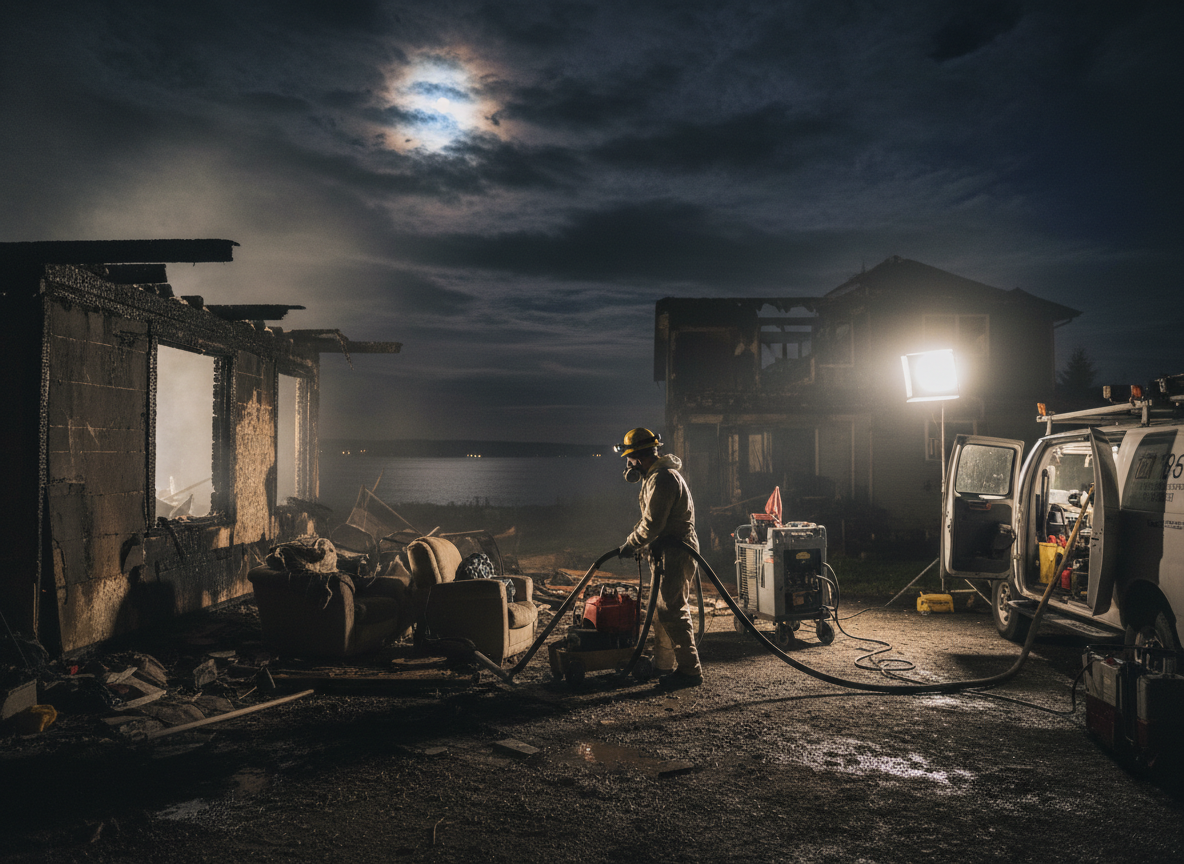
Camano Island homes built before the 1980s often contain cedar siding and older plaster that absorb smoke deeply, especially in Utsalady and Camano City neighborhoods. After a fire, the mild marine climate keeps humidity elevated even in dry summers, allowing acidic soot to continue etching surfaces and HVAC systems if not neutralized within the first 24 hours. Crews must test pH levels on multiple substrates before sealing, because standard cleaners fail on the alkaline residues left by many common building materials found in Island County construction.
Fires that start in kitchens or garages frequently travel through attics in single-story homes near Cama Beach State Park, where rooflines sit close to fir and cedar stands. Wet winters then drive moisture into charred framing once the structure is opened, raising the risk of hidden mold within days. Restoration teams isolate affected zones with negative air machines rated for the island's typical wind patterns and monitor moisture meters in real time to prevent secondary damage before drywall replacement begins.
Power restoration after a fire must account for the older electrical panels common in Madrona Beach cottages and the risk of hidden arc faults created by heat. Technicians coordinate with local utilities serving Stanwood and Arlington to verify safe reconnection while documenting every step for insurance adjusters. Odor removal requires thermal fogging followed by hydroxyl treatment because ozone alone does not penetrate the dense insulation found in many Island County homes.
Technician insight
In Camano Island the thing that catches most people out with 24 hour fire restoration is how wet winters keep humidity high enough that smoke stays trapped in the cedar siding and plaster of older homes around Utsalady and Camano City. Homeowners often try to air out the house themselves, which just drives soot deeper into insulation before crews arrive.
Kitchen fire spread into attic, Madrona Beach
A contained kitchen fire sent smoke through the attic of a 1970s home near Madrona Beach. Crews found heavy soot in the HVAC and moisture already entering charred roof decking from recent rains. Negative air and targeted cleaning prevented further damage; the family returned after three weeks with no lingering odor.
How it works
- 1
Emergency Board-Up and Site Secure
Technicians arrive within hours, board openings, and prevent weather intrusion from Camano Island's frequent winter rains.
- 2
Smoke and Soot Assessment
Full inspection of HVAC, attics, and wall cavities using moisture meters and pH testing across Utsalady and Camano City properties.
- 3
Contents Cleaning and Odor Neutralization
Pack-out of salvageable items followed by ultrasonic and thermal fogging to address embedded smoke in older cedar structures.
- 4
Structural Restoration and Final Clearance
Remove damaged materials, treat framing, and verify air quality before returning the home to pre-loss condition.
Pricing
Pricing varies by fire size, affected square footage, and materials; upfront written estimates provided after inspection.